

News
We held two gramophone concerts in Tokyo and Hakata. To commemorate these events, we are releasing the program for this project.
The program consists of eight pieces in total, though some of the songs performed in Tokyo and Hakata were played from different records. All of the selections are related to our new print collection, “OPERA,” or are inspired by compositions that were still in the conceptual stage.
We would also like to express our sincere gratitude to Umeya of the Phonograph, a phonograph expert, for his invaluable assistance with the phonographs, records, and song selection.
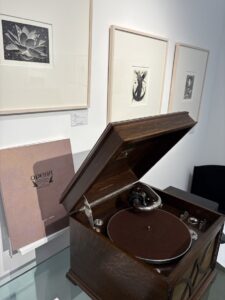
Program Curation: Karasawa Hitoshi Collaboration: Hideki Umeda (Umeya of the Phonograph)
Phonographs: (Tokyo) HMV Model 179, HMV Model 102
(Hakata) HMV Model 130 / HMV Model 102
1. “Blow the Wind Southerly” (Northumbrian folk song)
Kathleen Ferrier (contralto)
(Decca F9300) (rec. 1949)
https://www.youtube.com/watch?v=dXQuaq_2icU
This piece is a folk song from the Northumbrian region that expresses the feelings of a woman praying for her lover’s return as she faces the sea breeze; it was arranged and published by W.G. Whittaker in 1910. Ferrier became one of Britain’s leading singers almost overnight after her debut in 1942, and this recording was made at the height of her career.
2. Vivaldi (arr. Busch): Suite in A
Adolf Busch (vn), Rudolf Serkin (pf)
(HMV DB1524) (r.1931)
https://www.youtube.com/watch?v=rJ5EG6zhggc
This recording features an arrangement of the original work by the Baroque master Vivaldi, adapted for violin and piano by the violinist Adolf Busch himself. Busch’s playing style, characterized by the rich portamento and free rhythmic flexibility that were mainstream at the time, serves as an important record of the modern revival of Baroque music.
3. Handel: “Serse” – ‘Ombra mai fu’
This is the opening aria of Act I of the opera “Serse,” which Handel premiered in London in 1738. It is known as the song in which the Persian King Serse offers thanks for the peaceful shade provided by a single plane tree.
(Tokyo) Kirsten Flagstad (sp)
(HMV DB6791) (r.1948)
https://www.youtube.com/watch?v=VaVmJl8kEaE
Flagstad, hailed as the “Wagnerian singer of the century,” performs this aria—which was originally sung by a castrato at its premiere—with delicate legato.
(Hakata) Maria Olszewska (c-alt)
(HMV D1490) (rec. 1927)
https://www.youtube.com/watch?v=Gxs61K7rSPg&t=2224s
(Link: 37:04–)
German-born contralto Maria Olszewska performed on international stages, including the Vienna State Opera.
4. Gluck: “Orfeo ed Euridice” – ‘Che farò senza Euridice’
Tito Schipa (tenor)
(HMV DB1723) (recorded 1931)
https://www.youtube.com/watch?v=E3dZBISzsLo
This piece is a representative work of Gluck’s “reform opera,” which transformed the history of opera, and was sung by a castrato at its premiere in Vienna. Schipa was hailed as the epitome of the “tenore di grazia” (graceful tenor). Emphasizing the nuances of the text and perfect breath control (fiato), he portrays Orfeo in this work as he descends into the underworld to bring back his deceased wife.
5. Mozart: “Die Zauberflöte” – ‘Der Hölle Rache Kocht in Meinem Herzen’
An aria sung in Act II of the Singspiel *The Magic Flute*, premiered in 1791. It is one of the most challenging pieces for coloratura soprano, requiring a vocal range spanning three octaves and extremely fast staccato passages.
(Tokyo) Miliza Korjus (sp) (HMV EH898)
https://www.youtube.com/watch?v=OMDB_MFUIbA
Korjus, a Hungarian-Estonian, was hailed as a “legendary coloratura” for her precise staccato and three-octave vocal range. This recording of “The Queen of the Night” in particular is so technically accomplished that it has served as a model for subsequent singers.
(Hakata) Maria Ivogun (sp)
(Polydor B24232) (r.1925)
https://www.youtube.com/watch?v=GyRsYJ80XTs
Ivogun was a renowned Hungarian opera singer who made a name for herself as a legendary coloratura soprano in the operas of Mozart and R. Strauss; she also performs the “Ariadne on Naxos” aria in this concert.
6 . Weber: “Der Freischütz” – ‘Leise, leise, fromme Weise’
Lotte Lehmann (sp)
(Parlophone PX1016) (recorded 1929)
https://www.youtube.com/watch?v=Xon_gjoay4U
Considered a monumental work of German Romantic opera by Weber, this piece features a scene in Act II where the heroine Agathe prays to God for the safety of her lover Max.
The singer Lotte Lehmann reigned as the prima donna of the Vienna State Opera and was highly regarded by Mahler and Strauss.
7. Puccini: “Turandot” – ‘Nessun Dorma!’
Beniamino Gigli (tenor)
(HMV DB21138) (recorded 1949)
https://www.youtube.com/watch?v=7QSumyWzSaU
This is the famous aria sung by the mysterious Prince Calaf in Act III of Puccini’s final opera (premiered in 1926), as he is confident of victory. At the time of the recording, Gigli was 59 years old, yet he still maintained the brilliance of a voice described as “golden” and his astonishing breath control. This recording stands as a precious testament to his later years, during which he reigned as the preeminent interpreter of Puccini.
8. R. Strauss: “Ariadne auf Naxos” – ‘Großmächtigste Prinzessin – So war es mit Pagliazzo’
Maria Ivogun (sp) (HMV VB67) (r. 1932)
https://www.youtube.com/watch?v=_08he7-JGQw
First performed in 1916 in its definitive version (the second edition), this work features an original structure in which tragedy and comedy compete on stage. “The Great Princess,” sung by the free-spirited female clown Zerbinetta, is such a difficult piece that the composer himself later revised it due to its extreme technical demands.
At the strong request of composer Strauss himself, Ivogun was selected to play the role of Zerbinetta in the 1916 premiere of the revised version. This work has a historical background in which Strauss revised the grueling virtuosic demands of the original version to suit Ivoogyun’s vocal abilities.
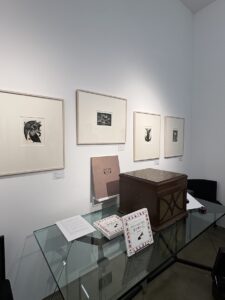
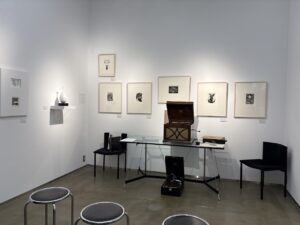
If you are interested in gramophones, please be sure to check out Mr. Umeda’s book, “Starting a Gramophone Lifestyle Today.”
